Showing posts with label butterflies. Show all posts

Friday, August 4, 2017

August Butterflies- The Swallowtails have arrived!

Earlier this summer i noticed there were very few butterflies. Typically we'd been seeing tons of them in the spring and summer, but this year there just weren't many at all. That is until August arrived, with it came the Swallowtails. i walked out side and count 15 butterflies on just one of my butterflies bushes. 


 This is a male Eastern Tiger Swallowtail.


 This is the female. She can be identified as the female, by all that blue on her tail. The male only has a few dots.


This is also a female Eastern Tiger Swallowtail. Only the females have the dark morph.


This one is a Spicebush Swallowtail They are smaller than the Easter Tiger. 


This is a Pipevine Swallowtail, which i rarely see here.  This year i've seen several!

i think the dry summer may be what caused the butterflies to delay their visit. They seemed to all appear right after we finally got some rain. Looking forward to getting more pictures this week.

Thursday, April 20, 2017

Spring at Panther Creek

Ever spring we visit Panther Creek, which is just a few miles from us in Dugspur, VA.  


The creek here is actually Big Reed Island Creek, and the road is called Panther Creek rd. Panther Creek is a smaller creek, that parallels the road for a while then connects up with the Greasy creek, which then connects to Big Reed Island.  The 'thinking rock' is a popular spot among locals. It's easy to climb up on it, it's relatively flat on top and the views of the creek are amazing. 


The area is always pretty, but in early spring Wild Phlox blooms on the rock faces. It's a pretty spectacular drive.  


It's hard to capture it in a photo, but the phlox is different shades of pink and sometimes white and covers the rocks. 


There is a place to pull over and trails that follow another small creek and cascading falls up into the mountain.  It's a really wonderful place to hike, but it's not uncommon to come across rattlesnakes here.  There are lots of native wildflowers that come up in this area, which is why it is one of my favorite places to hike.  This is wild columbine.


Wild Bleeding heart is a favorite that i rarely come across. So it's always a pleasure to see it growing here wild. 


Photographed my first Eastern Tiger Swallowtail of the season here. They were loving the wild Phlox. This is such an beautiful area to drive and hike, but when the phlox is blooming it's truly spectacular. We make point of coming here every spring to see it.

We have lived in Virginia for 17 years now, and we still feel so blessed to be here. i'm still completely fascinated by all the different fauna and flora of the area and never take any of it for granted.  In my humble opinion, there is just no place better than the Blue Ridge Mountains.

Tuesday, August 23, 2016

Raising Monarchs

Every year we walk down the road to collect the monarch eggs and caterpillars before the county mowers mow down all the milkweed. 


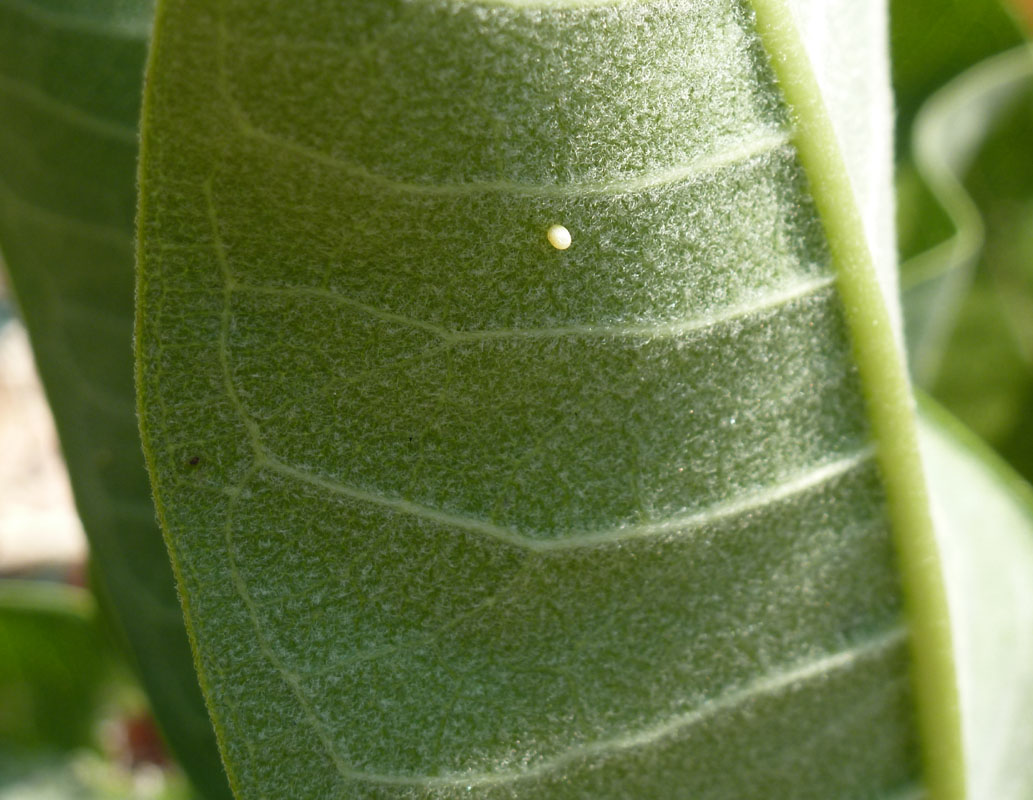
The eggs are extremely tiny, but we've learned to spot them easily.  We remove the leaf with the egg and bring it home. We use to leave the eggs and only collect the caterpillars, but the eggs kept disappearing. i don't know where it's ants or something else that carries them off, but something seems to eat them. 


The newly hatched caterpillars are extremely tiny. After they hatch they eat what is let of their egg and then begin to munch on the milkweed.


As the caterpillar grows it sheds it's skin several times. These are called instars.  


When the caterpillar reaches it's final instar (#5) it stops eating and find a quiet place to rest. It spins some silk to create a sling for it's back legs, then it hangs upside down in a J position. It will shed it's skin a final time and underneath is the green chrysalis. 


In this photo you can see the green chrysalis and a newly eclosed Monarch.


When the Monarch is ready to emerge from it's chrysalis, it is visible inside. Sometimes it's gets very dark, almost back a day or two before the monarch is visable.


When the monarch first ecloses, it's wings are crumpled and it's abdomen is swollen. It's body contracts and pushes the fluid from the abdomen into the wings. The sit and let their wings dry for a few hours after they have eclosed. When the wings are dry they will begin to open and close them, signaling that they are ready to be released.


So far we have raised and released 4. i have another chrysalis, a caterpillar in it's final instar and a few newly hatched caterpillars. In the wild only 1 in 10 monarch caterpillars survive to adulthood, so raising them inside in a controlled environment is really important for their survival. Monarch populations have been declining for years because of the use of pesticides and loss of food source (milkweed). This year the monarch population has started to increase and i truly believe that is in part due to the efforts of all those planting milkweed and raising caterpillars inside. 

i truly feel that it is not only beneficial to caterpillars, but also to me and my children. Watching the process and knowing that you are helping to make a difference is a wonderful feeling. Seeing our monarchs fluttering around the herb garden, tasting the flowers and leaving tiny new eggs on our milkweed plants is so incredibly rewarding. 

The movie Flight of the Butterflies  is currently streaming on Netflix. It's a visually stunning documentary that follows the yearlong migration of the monarch butterfly from the volcanic forests of Mexico all the way to Canada. Definitely worth watching. 


Sunday, September 23, 2012

End of Summer/ Happy Autumn!

i just have to take this moment to say how much i HATE the new blogger platform. 
 Apparently it no longer auto-saves (thanks so much for the warning!!)  After spending all morning on a blog post, i somehow clicked off the page. i'm not even sure how i did it, but there as no warning 'If you leave this page all current progress will be lost'.  Instead i got up to get something for the kids, when i sat back down the page was gone. So i clicked back on the window that was open and it brought me back to my post...except it was completely blank.  All the pictures, text....everything GONE.

So now i'm sitting here, having wasted my entire morning wondering if it is worth re-writing it all. 

Truth is...it's not.

 So instead, i'll leave you with a just a few pictures and a few words. Maybe i'll come back on a different day and write out the full story, but i'm ready to be outside playing and not stuck behind this silly computer. 


We ended our summer with four new surprise peeps. :)


And began our Autumn with five.  The little yellow peep in the center has quite a story to tell, but we'll save that for another day. (having already typed it all out once today) :/


The very last of our summer monarch caterpillars emerged from it's chrysalis and was released on the Autumn Equinox. Something nice about starting the season with new life.


 Our monarch flew away and danced circles around us. Came back several times to visit the flowers before disappearing for good.  She was our last monarch caterpillar to transform.

Now, i am heading outside with the kids to enjoy these days of warm weather and hold on to 'summer' as long as we can. Hopefully i'll get this blogger thing figured out soon with out too much more stress.

i have several draft posts that were started, but not finished and i have no idea how to find them now. There used to be a little button under the post i'm working on that took me to all the posts, but it's gone. i have looked all over the page and i can't find any way to access my past blog posts and drafts. If anyone can tell me how to do that, it would be much appreciated!!  i don't do well with change! Gah!!


Friday, September 7, 2012

Monarch Twins update.

Update on our Monarch Twins.
They emerged very early in the morning, and were already drying their wings when i noticed them. i was pretty disappointed that we didn't get to see if they emerged at the exact same time.


They both were stretching and drying their wings, so i know they must have emerged very close to the same time.


i removed them from the container and gave them a bit more room to dry their wings and have a little snack on some fresh flowers before taking flight.


When they were ready we took them outside. Even though it was a bit overcast they immediately took flight. i was lucky to get this picture as they flew off the minute i opened the door.

Later that day while i was in the garden a monarch butterfly soared past. The way that it glided in circles, and seemed to dance in the air made me think perhaps it was one of the butterflies we had released. Monarchs fly as if they are love with life, they seem so carefree and graceful. They fly quite differently than other butterflies, and it truly looks like a dance. This one circled me a few times and lighted upon my arm for just a moment as if to say 'i remember you'.

Then it was off again, flying high above the trees and eventually disappearing. <3


The butterfly counts not months but moments, and has time enough. ~Rabindranath Tagore

Tuesday, August 28, 2012

Morning Magic.


Early yesterday morning, i walked outside to check on one of my gardens and witnessed this Red Spotted Purple emerging from it's chrysalis. i didn't have my camera with me, so i watched it emerge and then ran back to the house to get my camera, so i could get some pictures of it. We have raised lots of different caterpillars inside, Monarch, Painted lady, Black Swallowtail, Eastern tiger swallowtail, Great Spangled Fritillary etc. However, this was the first time i've ever seen a Red Spotted Purple's chrysalis and witnessed it emerging. i'm actually not even sure what the caterpillar looks like. It was really neat to watch!


While i was getting photos i spooked it a little, and it tried to fly off. It's wings were still wet and it was too heavy to fly.


So i gently lifted it up and brought it to a safe place so it could continue to dry its wings.


i'm not sure why it chose to form it's chrysalis on my garden fence. It seems kind out in the open. Typically they would pupate on a tee branch, and the chrysalis would be hidden among the leaves or camouflaged to look like a dead leaf. i'm wondering if the caterpillar had fallen out of a near by tree, and decided the fence was as good a place as any.


i placed the butterfly on this tree and it spread out it's wings to dry them and sun itself.

Such a magical and unexpected thing to witness. Watching a new butterfly emerge and eventually take flight is always a beautiful way to start the day.


Saturday, August 27, 2011

Monarch hunting.

A few days ago i spotted a monarch butterfly fluttering around the yard. She spent the whole day gliding from flower to flower and dancing and spinning in the garden. This is only the second monarch we've seen this year, so i suspected she was probably out laying her eggs. We went for a walk down the road to check all the milkweed plants for signs of eggs and caterpillars.

Both of the kids have become expert monarch hunters. Observing each leaf carefully for signs of munching, frass or tiny little eggs.

We found some Milkweed Tussock moth caterpillars! These guys are commonly found on milkweed along with milkweed bugs.


Sage was the first to spot an egg! They are super tiny!

Monarch eggs have a conical shape, with vertical ridges. They are usually pale yellow or creamy white.


When the eggs begin to darken, it means the caterpillar is about the hatch!!

The newly hatched caterpillar is only a little more than a millimeter in length. After they hatch from the egg, they eat the egg and then they begin eating the milkweed.

We returned home with 4 monarch eggs, one has hatched and the other three have darkened and will be hatching any time. Our little caterpillar will munch on milkweed for about 9-14 days, and then it will form it's chrysalis. As always, we will be sure to document it all!!


Sunday, August 21, 2011

Caterpillar Transformation and a Surprise!

At the end of July my boy found a tiny little caterpillar, that we quickly identified as a Black Swallowtail. We left it to munch in our carrots and when it was full grown we brought it inside so that we could watch it transform.

We put him in an aquarium, and gave him some carrot greens. Black swallowtails also eat fennel, parsley, dill and queen anne's lace.


i placed a few sticks inside our aquarium, so that he could find a perfect place to form his chrysalis. When he found a good spot, he got very still and stayed like that for a quite a while. Then we watched him turn around on the stick, and spin a bit of silk.


He stuck his back feet in the silk, and spun a thin silk sling to support his body. Then he got into position. He stayed like this for maybe 24 hours or so. We started to notice he seemed to be puffing up a bit, and his skin began to look very stretched.


The more he puffed the thinner his skin became and it changed to a dull color. He let go of the stick, and his skin began to split. He slowly wiggled the skin down his body.

Underneath, you can start to make out the familiar chrysalis shape. His skin is about half way down now, and he is still working on pushing the skin off.


One the skin is completely off, he rests. His new chrysalis is green and soft.


After a few hours, his new skin has darkened and hardened into it's chrysalis. It's camouflaged to resemble a dead leaf on the twig, or a part of the branch. After pupating for around 2-3 weeks the Black swallowtail butterfly should emerge from its chrysalis. Caterpillars that are found in the fall, will often overwinter in their chrysalis emerging instead in the spring. Our Caterpillar formed it's chrysalis on August 1st, so we have been patiently waiting for him to make his apprentice.

Instead we got quite the surprise!


Instead of a butterfly, this Ichneuman parasitic wasp emerged from the chrysalis!

When our little caterpillar was outside munching carrots, a female wasp had found it and laid her egg inside the caterpillar. As the caterpillar continued to feed and grow the wasp egg hatched and a tiny wasp maggot began to feed on caterpillar. While our caterpillar was pupating, the wasp larva was feasting.


When the wasp is fully grown, it exits the chrysalis through a large hole in the side. Although it just part of nature, it was rather disappointing being that it was our only Black Swallowtail cat this year. My daughter was completely fascinated by the whole thing, but my boy was a little more bummed. We've witnessed other parasite infections with the monarch caterpillars we've raised.

No matter how many times we raise caterpillars, it is always a learning experience. The process is always amazing, no matter what happens to hatch out.

Friday, August 19, 2011

A peek at our nature table.

During the summer months, we often put away our nature table decorations and our nature table becomes more of a living table. Earlier this year, we had an aquarium set up and watched tadpoles and salamander larvae hatch from eggs and develop into frogs and salamanders. We released them back into the creek this spring.
Then a few weeks ago we set up the aquarium again, but this time as a caterpillar nursery.

While gardening i found a tomato hornworm munching away in my tomatoes. i was just about to feed it the chickens, when my daughter became upset and asked if we could raise it inside. i've never raised a hornworm, but after a bit research decided we could. Hornworms pupate underground. So we put a couple inches of soil in a container, and in the morning our hornworm had buried himself around July 26th.

Early this morning, i noticed movement in the aquarium. Our hornworm had emerged into a 5 spotted hawkmoth.

i took this first picture before the sun came up, so it's a bit dark. We are going to release him this evening at dusk...far away from garden. lol.


We also found a black swallow tail caterpillar not long after, and brought it inside too. We watched it transform into it's chrysalis (that will be it's own post once it emerges).

Around this time of year we hike up and down our road looking for monarch eggs and caterpillars on the milkweed that grows everywhere. We've gone a few times since the beginning of August, but haven't found any yet. Last week when we went looking we found a mystery egg on the backside of a milkweed leaf.

If you click the picture, you can see the tiny orange/pink egg a little more than half way down. This is not a monarch egg. Monarch eggs are yellow and conical in shape. There are only a few insects known to eat milkweed so i have no idea what this egg might be.


i am fairly certain that it's a butterfly egg.

This is how it looked on 8-12.

On 8-16 the egg is now translucent and you can clearly see something inside there.

What can it be??

Took this one today, 8-19. You can click the picture to see it better. There is definitely something in there! We are super excited to see what hatches out, and hope that we can identify it quickly so we can provide the proper food for it. i've been placing a variety of different common host foods in the aquarium with it, in case i miss it's hatching. The kids have been fascinated by the pictures, and trying to guess what it may be. Any ideas??

We are still waiting for the monarchs to arrive, as with everything this year they seem to be running a bit behind. We've only spotted one monarch butterfly so far this year. Last year we began finding the caterpillar at the end of July/beginging of August.

Our swallowtail butterfly should be emerging any day now. We've been checking our dill,fennel and carrots daily for new caterpillars, but haven't found any yet. The kids ask daily to look for monach eggs, so hopefully we will find some and our nature table will become a temporary home to some munchin' crunchin' caterpillars. :)